


Has the VB-MAPP been used in research?
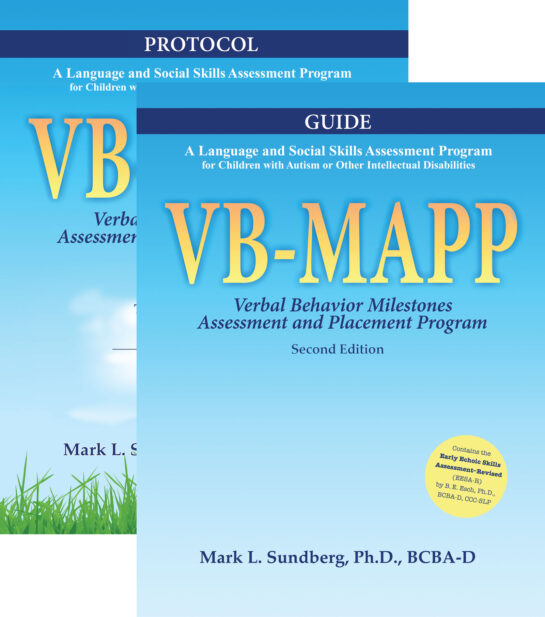
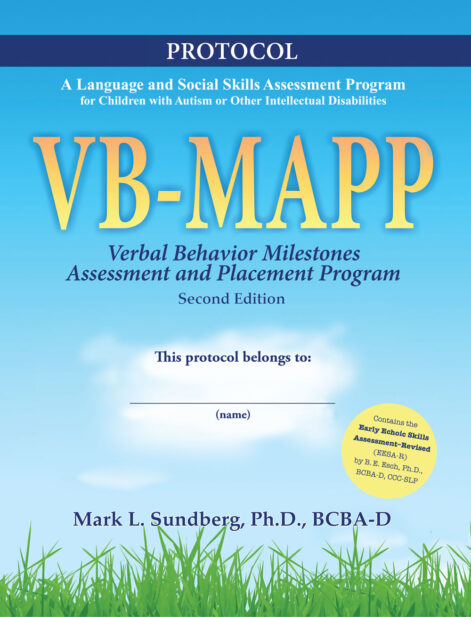
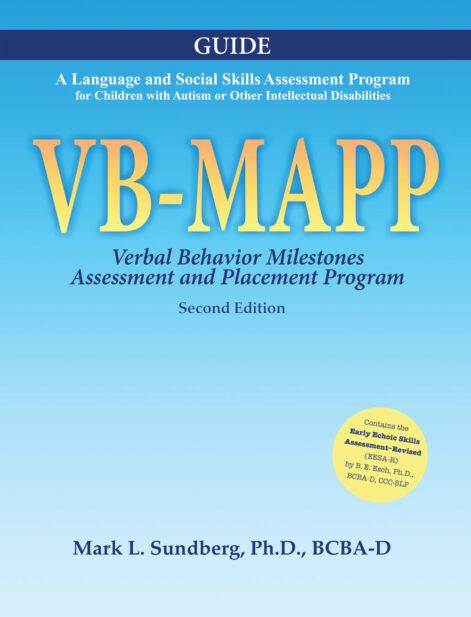
Yes, the VB-MAPP has been used in research as a tool to measure the participants’ baseline verbal skills, as well as changes in performance following intervention. These studies have been published in several different journals including the Journal of Applied Behavior Analysis (JABA), The Analysis of Verbal Behavior Journal (TAVB), Research in Autism Spectrum Disorders, Behavior Analysis in Practice, and the Journal of Developmental and Physical Disabilities. The VB-MAPP has also been used in several studies that have been presented at ABA conferences. In addition, the VB-MAPP appears in various ethics scenarios in Bailey, J.S., & Birch, M. R. (2016). Ethics for Behavior Analysts, 3rd ed. New York and London, Rutledge. Below are 43 research studies that have used the VB-MAPP for quantifying the verbal skills of their participants.
- Barkaia, A., Stokes, T. F., & Mikiashvili, T. (2017). Intercontinental telehealth coaching of therapists to improve verbalizations by children with autism. The Journal of Applied Behavior Analysis, 50, 582-589.
- Brodhead, M. T., Higbee, T. S., Gerencser, K. R., & Akers, J. S., (2016). The use of the discrimination-training procedure to teach mand variability to children with autism. Journal of Applied Behavior Analysis, 49, 34-48.
- Byrne, B. L., Rehfeldt, R. A., Aguirre, A. A., (2014). Evaluating the effectiveness of a stimulus pairing observation procedure and multiple exemplar instructions on tact and listener responses in children with autism. The Analysis of Verbal Behavior, 30, 160-169.
- Carnett, A., & Ingvarsson, E. T., (2016). Teaching a child with autism to mand for answers to questions using a speech-generative device. The Analysis of Verbal Behavior, 32, 233-241.
- Cidivini-Motta, C., Scharrer, N., & Ahearn, W. H. (2017). An assessment of three procedures to teach echoic responding. The Analysis of Verbal Behavior, 33, 41-63.
- Charania, S. M., LeBlanc, L. A., Sabanathan, Narmatha, Ktaetch, I. A., Carr, J. E., & Gunby, K., (2010). Teaching effective hand raising to children with autism during group instruction. Journal of Applied Behavior Analysis, 43, 493-497.
- Contreras, B. P., & Betz, A. M. (2016). Using lag schedules to strengthen the intraverbal repertoires of children with autism. Journal of Applied Behavior Analysis, 49, 3-16.
- Dixon, M. R., Belisle, J., Stanley, C., Rowsey, K., Daar, J. H., & Szekely, S. (2015). Toward a behavior analysis of complex language for children with autism: Evaluating the relationship between PEAK and the VB-MAPP. Journal of Developmental and Physical Disabilities. 27, 223-233.
- Dixon, M. R., Belisle, J., Stanley, C. R., Daar, J. H., & Williams, L. A. (2016). Derived equivalence relations of geometry skills in students with autism: an application of the PEAK-E curriculum (2016) The Analysis of Verbal Behavior, 32, 38-45.
- Frampton, S., & Shillingsburg, M. A. (2017). Teaching children with autism to explain how: A case for problem solving? The Journal of Applied Behavior Analysis, 51, 236-254.
- Geiger, K. B., LeBlanc, L. A., Dillon, C. M., & Bates, S. L. (2010). An evaluation of preference for video and in vivo modeling, Journal of Applied Behavior Analysis, 43, 279-283.
- Gevarter, C., O’Reilly, M. F., Kuhn, M., Mills, K., Ferguson, R., Watkins L., Sigafoos, J., Lang, R., Rojeski, L., & Lancioni, G. E., (2016). Increasing the vocalization of individuals with autism during intervention with a speech-generative device. Journal of Applied Behavior Analysis, 49, 17-33.
- Grannan, L., & Rehfeldt, R. A. (2012). Emergent intraverbal responses via tact and match-to-sample instruction. Journal of Applied Behavior Analysis, 45, 601-605.
- Gunby, K. V., Carr, J. E., & LeBlanc, L. A. (2010). Teaching abduction-prevention skills to children with autism, Journal of Applied Behavior Analysis, 43, 107-112.
- Humphreys, T., Polick, A. S., Howk, L. L., Thaxton, J. R, & Ivancic, A. P. (2013). An evaluation of repeating the discriminative stimulus when using least-to-most prompting to teach intraverbal behavior to children with autism. Journal of Applied Behavior Analysis, 46, 534-538.
- Johnson, K. A., Vladescu, J. C., Kodak, T., & Sidner, T. M. (2017). An assessment of the differential reinforcement procedures for learners with autism spectrum disorder. The Journal of Applied Behavior Analysis, 51, 236-254.
- Kaitlin G., Causin, K. G., Albert, K. M., Carbone, V. J., & Sweeney-Kerwin, E. J. (2013). The role of joint control in teaching listener responding to children with autism and other developmental disabilities. Research in Autism Spectrum Disorders, 7, 997-1011.
- Kelley, M. E., Liddon, C. J., Ribeiro, A., Greif, A. E., & Podlesnik, C. A. (2015). Basic and translational evaluation of renewal of operant responding. Journal of Applied Behavior Analysis, 48, 390-401.
- Kisamore, A. N., Karsten, A. M., & Mann, C.C., (2016). Teaching multiply controlled interaverbals to children and adolescents with autism spectrum disorders. Journal of Applied Behavior Analysis, 49, 1-22.
- Kobari-Wright, V. V., & Miguel, C. F. (2014). The effects of listener training on the emergence of categorization and speaker behavior by children with autism. Journal of Applied Behavior Analysis, 47, 431-436.
- Kodak, T., Clements, A., Paden, A. R., LeBlanc, B., Mintz, J., & Toussaint, K. A. (2015). Examination between an assessment of skills and performance on auditory-visual conditional discriminations for children with autism spectrum disorders. Journal of Applied Behavior Analysis, 48, 52-70.
- Koehler-Platten, K., Grow, L. L., Schulze, K. A., & Bertone, T. (2013). Using a lag schedule of reinforcement to increase phonemic variability in children with autism spectrum disorders. The Analysis of Verbal Behavior, 29, 71-83.
- Landa, R. K., Hansen, B., & Shillingsburg, M. A. (2017). Teaching mands for information using “when” to children with autism. The Journal of Applied Behavior Analysis, 50, 538-551.
- Lepper, T. L., & Petursdottir, A. I. (2017). Effects of response-contingent stimulus pairing on vocalizations of nonverbal children with autism. The Journal of Applied Behavior Analysis, 50, 756-774.
- Lepper, T. A., Petursdottir, A. I., & Esch, B. A. (2013). Effects of operant discrimination training on the vocalizations of nonverbal children with autism. Journal of Applied Behavior Analysis, 46, 656–661.
- Lorah, E., Tincani, M., Dodge, J., Gilroy, S, Hickey, A., & Hantula, D. (2013). Evaluating picture exchange and the iPad as a speech generating device to teach communication to young children with autism. Journal of Developmental and Physical Disabilities, 25, 637-649.
- Loughrey, T. O., Betz, A. M., Majdalany, L. M., & Nicholson, K. (2014). Using instructive feedback to teach category names to children with autism. Journal of Applied Behavior Analysis, 47, 425-430.
- Loughrey, T. O., Contreras, B. P., Majdalany, L. M., Rudy, N., Sinn, S., Teague, P., Marshall, G., McGreevy, P., & Harvey, A. C. (2014). Caregivers as interventionists and trainers: teaching mands to children with developmental disabilities, The Analysis of Verbal Behavior, 30, 128-140.
- Marchese, N. V., Carr, J. E., LeBlanc, L. A., Rosati, T. C., & Conroy, S. A. (2012). The effects of the question “what is this?” on tact training outcomes of children with autism. Journal of Applied Behavior Analysis, 45 (3) 539-547.
- Mason, L. L., & Andrews, A., (2014). Referent-based verbal behavior instruction for children with autism. Behavior Analysis in Practice, 7, 107-111.
- Mason, L. L., Davis, D., & Andrews, A., (2015). Token reinforcement of verbal responses controlled by temporally removed verbal stimuli. The Analysis of Verbal Behavior, 31, 145-152.
- Nottingham, C. L., Vladescu, J. C., Kodak, T., & Kisamore, T. M. (2017). Incorporating multiple secondary targets into learning trials for individuals with autism spectrum disorder. The Journal of Applied Behavior Analysis, 50, 653-661.
- Polick, A. S., Carr, J. E., & Hanney, N. M. A. (2012). A comparison of general and descriptive praise in teaching intraverbal behavior to children with autism. Journal of Applied Behavior Analysis, 45, 593-605.
- Rader, L. Sidener, T. M., Reeve, K. F., Sidener, D. W., Delmolino, L., Miliotis, A., & Carbone, V. J. (2014). Stimulus-stimulus pairing of vocalizations: A systematic replication. The Analysis of Verbal Behavior, 30, 69-74.
- Shillingsburg, M. A., Cariveau, T., Talmadge, B., & Frampton, S. (2017). A preliminary analysis of procedures to teach children with autism to report past behavior. The Analysis of Verbal Behavior, 33, 275-282.
- Somers, A., Sidener, T. M., DeBar, R. M., & Sidener, D. W. (2014). Establishing current mands for items and mands for information about location in children with autism. The Analysis of Verbal Behavior, 30, 29-35.
- Stauch, T., LaLonde, K., Plavnick, J. B., & Bak, M. Y. S., Gatewood, K. (2017). Intraverbal Training for individuals with autism: The current status of multiple control. The Analysis of Verbal Behavior, 33, 98-116.
- Sundberg, C. T., & Sundberg, M. L., & Michael, J. (2018). Covert verbal mediation and matching to sample. The Journal of the Experimental Analysis of Behavior, 109, 600-623.
- Tullis, C. A., Frampton, S., Delfs, C. H., & Shillingsburg, M. A. (2017). Teaching problem explanations using instructive feedback. The Analysis of Verbal Behavior, 33, 64-79.
- Vallinger-Brown, M., & Rosales, R., (2014). An investigation of stimulus pairing and listener training to establish emergent intraverbals in children with autism. The Analysis of Verbal Behavior, 30, 148-159.
- Vandbakk, M., Arntzen, E., Gisnaas, A., Antonsen, V., & Gundhus, T., (2012). Effect of training different classes of verbal behavior to decrease aberrant verbal behavior. The Analysis of Verbal Behavior, 28, 137-144.
- Watts, A. C., Wilder, D. A., Gregory, M. K., Leon, Y. & Ditzian, K. (2013). The effects of rules on differential reinforcement of other behavior. Journal of Applied Behavior Analysis, 46, 680-684.
- Wymer, C. A., Tarbox, J., Beavers, G. A., & Tullis, C. A., (2016). Teaching children with autism to follow rules specifying behavior and consequence. The Analysis of Verbal Behavior, 32.